Most residential septic tanks need pumping every 3 to 5 years, depending on tank size and how many people live in the house. A 1,000 gallon tank serving a family of four often lands closer to the 3 year mark. Vista Porta Pros runs septic pumping across Vista, CA, plus grease traps and emergency calls when a system backs up without warning.
The honest answer: it depends on tank size and household size, and there is no single number that fits every property in Vista. A 1,000 gallon tank under a 4-person household is a different math problem than the same tank under a 6-person household running two extra loads of laundry a week. As a baseline, residential tanks are typically pumped every 3 to 5 years. Homes on well water, homes with garbage disposals, and homes that added a bedroom or a bathroom since the tank was installed tend to fall on the shorter end of that range. If you are not sure where your property sits, septic tank warning signs is worth a read before you guess, and how often to pump a septic tank walks through the variables in more depth. Guessing wrong in either direction costs money: pumping too early wastes a service call, pumping too late risks a backup into the house. We size the interval to the property, not to a generic schedule pulled off a chart.
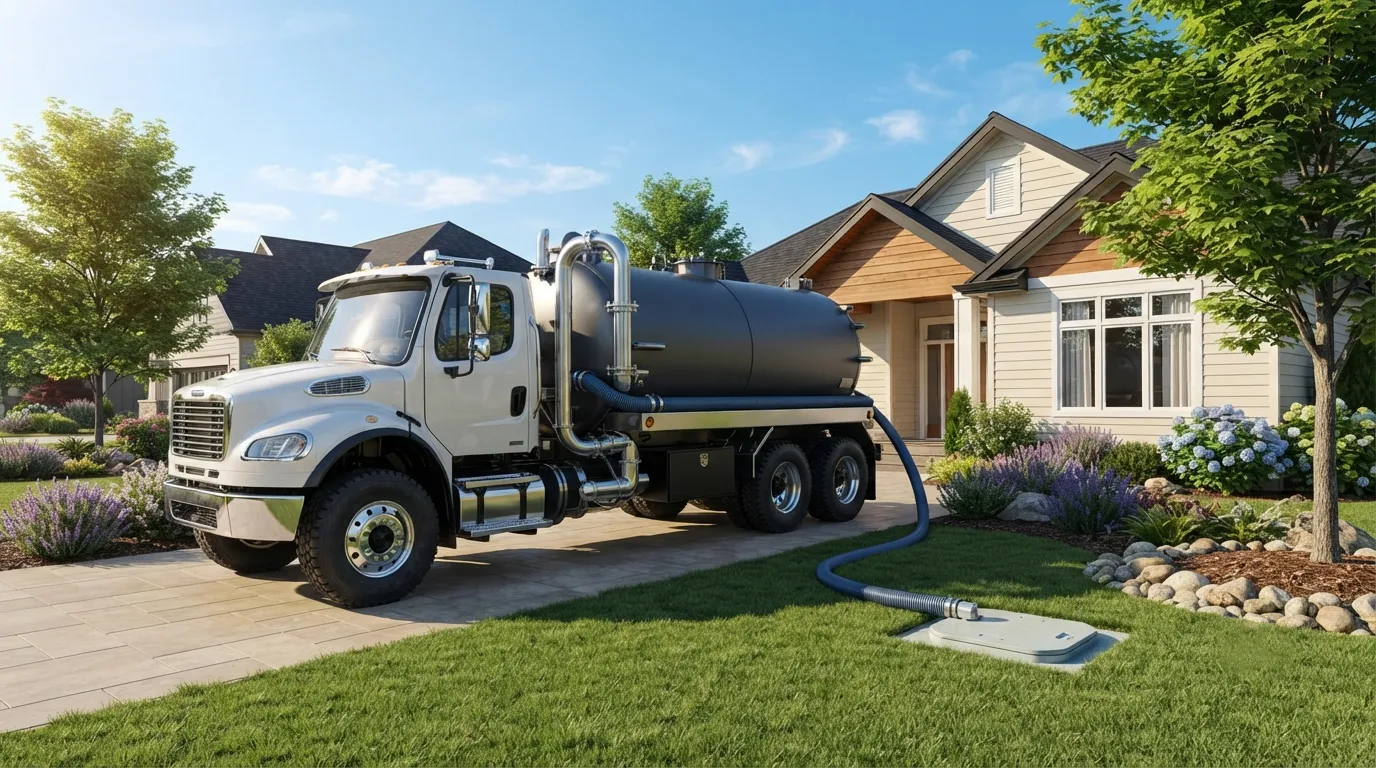
Slow drains, gurgling pipes, and a wet patch over the drain field are the three signs that show up first, usually weeks before a full backup. Sewage odor near the tank lid or standing water pooling in the yard after dry weather are later signs, and by that point the system is close to failing. A toilet that will not flush properly, or multiple fixtures backing up at once, means the tank is likely full or the drain field is struggling. None of these signs are subtle once they start, but homeowners often write off the first one or two as unrelated plumbing quirks. If you are seeing any of this, septic tank warning signs covers the full list, and it is worth calling before a small problem turns into raw sewage in the yard. We field these calls across Vista and out toward Lake San Marcos, 6.5 miles south, often same week.
A standard visit includes locating and uncovering the tank lid, pumping the tank fully, and a quick visual check of the baffles and the inlet and outlet pipes. We note tank condition, flag anything that looks like a structural problem, and let you know if the drain field shows signs of stress. This is not just suction: it is an inspection built into the same visit, so you are not paying for two truck rolls when one covers both jobs. For grease-heavy commercial kitchens, grease trap pumping follows a different standard, since interceptors are pumped once fats, oils, grease and solids reach 25 percent of liquid depth rather than on a fixed calendar. Residential septic and grease trap service are billed and scheduled separately because the triggers are different. If your property needs a broader look before or after pumping, septic tank cleaning and septic tank pumping cost both go into more detail on what a full service call covers.
Pricing depends on tank size, access, and how far the truck has to travel, and quoting a single flat number for every property in Vista would be misleading. Below is the general band for a standard residential pump-out call.
| Service | Duration | Typical Range |
|---|---|---|
| Septic pumping | Day rate | $150 to $300 |
| Emergency weekend call | Weekend | $50 to $150 |
A 1,000 gallon tank pumping cost usually sits in the lower half of that day-rate range for straightforward access; tanks with buried or hard-to-reach lids, or tanks that have gone longer than the usual 3 to 5 year interval and packed in more solids, run higher. For a full breakdown by tank size and access difficulty, see septic tank pumping cost. If you are comparing this against other site needs on the same property, like a roll-off dumpster rental for a renovation or a temporary fence rental around excavation, we can bundle scheduling so the septic truck and other equipment do not compete for the same driveway access.
Yes. A holding tank is a different setup from a septic system: it has no drain field, so everything that goes in has to be pumped out on a schedule rather than partially treated on site. We rent and service holding tanks for construction sites without sewer hookups, remote properties, and events where a septic system is not an option. See holding tank rental for setup details. Holding tanks pair naturally with other job site equipment: a construction site services package might combine a holding tank with standard porta potty rental units and a temporary power pole for crews working a site with no utilities yet connected. Farms and agricultural operations without municipal sewer access use holding tanks too; OSHA 1928.110 sets field sanitation standards for hand-labor employees at one facility per 20 workers, within a quarter mile walk, and holding tanks help meet that when a permanent system is not feasible. Farm and agricultural restrooms covers that use case directly.
Call us and we will get a truck out, day or night, because a septic backup does not wait for business hours. Emergency weekend response runs $50 to $150 for the call itself, separate from the pumping cost, and we prioritize backups over routine scheduled pump-outs. A backed-up system is a health hazard fast: raw sewage in a yard or a basement is not something to sit on for a few days waiting for a convenient slot. If the backup is tied to a grease interceptor rather than a residential tank, emergency septic service and grease trap pumping both apply, and we will figure out which on the call. We run emergency response through Vista and into Bonsall, 12.0 miles northeast, and Hidden Meadows, 11.1 miles east, without treating those as special trips.
If your event or job site needs sanitation instead of or alongside septic work, portable toilet rental and portable restroom rental cover standard units, ADA accessible porta potty rental meets ADA Standards 213.2 for clustered unit accessibility, and restroom trailer rental is the better fit for weddings, festivals, and multi-day events. For job sites, OSHA 1926.51(c)(1) sets toilet ratios by crew size, starting at one facility for 20 workers or fewer, and OSHA portable toilet requirements breaks that down further. We also handle roll-off dumpster rental, storage container rental, and temporary fence rental for the same job sites that need septic or holding tank service, so one call can cover more of the property than just the tank.
Day-rate septic pumping runs $150 to $300 depending on tank size and access. Emergency weekend calls run $50 to $150 on top of that. A 1,000 gallon tank with easy lid access typically lands on the lower end. See septic tank pumping cost for size-specific detail.
Every 3 to 5 years for most households, driven by tank size and how many people live in the home. Larger households or homes with garbage disposals often need pumping closer to the 3 year mark. How often to pump a septic tank covers the variables.
A septic tank treats waste on site and drains into a leach field. A holding tank has no drain field; everything gets pumped out on a set schedule. We service both. See holding tank rental for setup and rental details.
Slow drains, gurgling pipes, and a soggy patch over the drain field usually show up first. Sewage odor and standing water come later and mean the system is close to failing. Full list at septic tank warning signs.
Yes, day or night. Emergency weekend response runs $50 to $150 for the call, and we prioritize active backups over scheduled work. We cover Vista and nearby areas including Bonsall and Hidden Meadows. Details at emergency septic service.
No. Grease interceptors get pumped once fats, oils, grease and solids hit 25 percent of liquid depth, not on a fixed calendar like residential septic tanks. Commercial kitchens need this checked more often. See grease trap pumping for that schedule.
Yes. Vista Porta Pros delivers septic pumping service across Vista and the surrounding metro, with same-day and next-day drop-off available on most orders.
Pricing depends on the unit and how long you need it. See our cost breakdown and request a free quote for an exact figure.
Standard rentals include scheduled service — a pump-out, a clean, a restock and fresh deodorizer. Busy or hot-weather sites can be serviced more often.
Call now or request a free quote — clean units, on-time delivery, transparent pricing.